
Alternatives to Allpa Botanicals for Eczema
Table of Contents
- Why People Seek Alternatives to Allpa Botanicals
- Botanical Skincare Ingredients That Support Sensitive Skin
- Small-Batch Botanical Skincare Brands Worth Considering
- How to Compare Natural Skincare Brands for Your Needs
- Pound Of Love Naturals: A Handcrafted Alternative
- What to Know About Natural Skincare for Eczema-Prone Skin
- Conclusion
- Frequently Asked Questions
Last Updated: October 14, 2026
Why People Seek Alternatives to Allpa Botanicals
At Pound Of Love Naturals, we understand that finding the right botanical skincare alternatives is deeply personal. What works for one person's skin barrier might not suit another's.
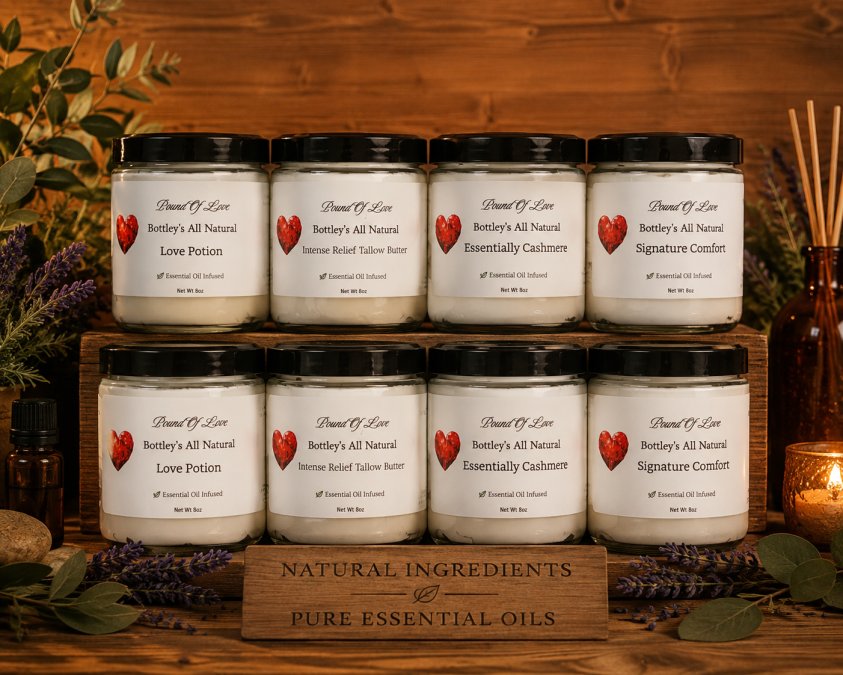
The good news: there are thoughtfully formulated botanical skincare options beyond any single brand. This guide covers the ingredients that matter, how to evaluate brands, and handcrafted options, including our own.
Botanical Skincare Ingredients That Support Sensitive Skin
Any effective botanical skincare alternative starts with understanding which ingredients support sensitive or irritated skin, not every botanical works the same way on every person.
Emollients and Moisturizers
Emollients are the workhorses of sensitive skincare, filling gaps between skin cells and creating a protective layer that prevents moisture loss.
Tallow is bio-compatible with human skin, matching the lipid profile of a healthy skin barrier, so it absorbs quickly without a greasy residue.
Colloidal oats function differently from oils and butters: they form a protective barrier on the skin's surface while locking in moisture, making them especially valuable for itchiness or active irritation.
Soothing and Anti-Inflammatory Botanicals
Beyond moisturizers, certain botanicals are known for soothing properties. Aloe vera has been used for centuries to cool irritation, and its gel contains compounds many find calming on reactive skin.
Calendula, chamomile, and lavender are traditional skincare botanicals.
Soothing botanicals work best within a complete formula with moisturizers and skin-barrier support, a botanical alone won't support damaged skin without emollients and protective ingredients alongside it.
Small-Batch Botanical Skincare Brands Worth Considering
When people search for an alternative to a specific botanical brand, they want to compare products side by side. The most useful criteria are verifiable on a label or product page.
A Practical Comparison Framework
Use these five criteria, moving from easiest to verify to hardest.
- Full ingredient list (INCI or common name). A brand listing every ingredient, carrier oils, preservatives, fragrance components, is easier to evaluate than one listing only "hero" botanicals.
- Fragrance disclosure. "Fragrance," "parfum," and "essential oil blend" differ. Fragrance-free means no added scent; unscented can still contain masking fragrance. For reactive skin, this matters more than the botanical list.
- Preservative system. Water-containing products (creams, lotions, aloe gels) need preservatives to prevent microbial growth; anhydrous products (balms, soaps, oils) generally do not. A brand explaining its preservative choice is more transparent than one hiding behind "preservative-free" claims on a water-based product.
- Format and use case. Bar soap, balm, lotion, and oil serve different roles. Bar soaps cleanse and can be drying; balms and lotions leave a film and are typically used after cleansing. Comparing soap to lotion is not like-for-like.
- Batch and sourcing information. Small-batch producers often share batch dates, lot numbers, or sourcing notes, a signal of production discipline rather than a guarantee of performance.
What the Criteria Reveal
| Criterion | What to Look For | Why It Matters |
|---|---|---|
| Ingredient list | Complete, in descending order | Lets you spot known irritants and compare formulas |
| Fragrance | "Fragrance-free" vs. "unscented" vs. essential oils | Fragrance is a common trigger for reactive skin |
| Preservatives | Disclosed system in water-based products | Undisclosed or absent preservatives in water-based products are a safety concern |
| Format | Soap, balm, lotion, oil | Determines how and when you use it |
| Sourcing | Batch dates, origin notes | Signals production discipline, not efficacy |
The Evidence Question
Most botanical skincare brands lean on three kinds of support: traditional use, laboratory (in vitro) findings, and human clinical studies. These are not equivalent.
- Traditional use describes how a plant has been used historically. It is context, not proof.
- Laboratory findings show what an extract does to cells or bacteria in a dish; results often do not carry over to intact human skin.
- Human clinical studies are the strongest category, but vary widely in size, duration, and application method.
A brand that separates these categories, rather than blending them into one "clinically proven" claim, gives you more honest information. When you see a claim, ask: traditional use, lab finding, or human study?
A Note on "Natural" and "Clean"
"Natural" has no single regulatory definition for cosmetics in the United States, and "clean" is a marketing term, not a regulated category. Neither tells you whether a product is gentle for your skin; the ingredient list and format tell you more.
Triple Aloe Avocado Tallow Soap →
FDA information on cosmetics and labeling
How to Compare Natural Skincare Brands for Your Needs
Choosing between botanical skincare alternatives requires a systematic approach. Don't rely on marketing language alone; dig into what the brand actually does and how transparent it is.
Evaluating Ingredient Transparency
Start by reading the full ingredient list, not just marketing copy highlighting "hero" ingredients.
Transparency extends beyond the label. Does the brand share sourcing information, such as where its aloe comes from or whether its coconut oil is organic?
Look for certifications that matter: organic certification for plant-based ingredients, grass-fed verification for tallow, fair-trade sourcing for botanicals from developing regions.
Testing for Compatibility
Before committing to a full-size product, start small. Many reputable brands offer sample or travel sizes.
Patch test before applying a new product to your face or body: apply a small amount to your inner arm or behind your ear and wait 24-48 hours.
Keep a simple journal when introducing new products: note the date, product, how your skin responded, and any changes in redness, itching, or texture.
Pound Of Love Naturals: A Handcrafted Alternative
We created Pound Of Love Naturals because we believe skincare should work in harmony with your body's natural biology, not against it.
Our approach centers on ingredient transparency.
The Triple Aloe Avocado Tallow Soap ($10.00) combines grass-fed tallow with triple-infusion aloe vera, fresh avocado puree, and colloidal oats.

Each product ships within 2-5 business days because we make them fresh, your soap is made after you order it, not sitting in a warehouse for months.
What to Know About Natural Skincare for Eczema-Prone Skin
Most articles on botanical skincare for sensitive skin repeat the same three points: natural is not always gentler, fragrance can irritate, and consistency matters. Those are true, but they don't help you decide what to buy or how to test it. This section covers the practical safety and evidence questions other guides skip.
Patch Testing: A Concrete Protocol
Patch testing is the single most useful thing you can do before committing to a new product. A common approach:
Triple Aloe Avocado Tallow Soap →
- Choose a small area of intact skin, such as the inner forearm or behind the ear.
- Apply a dime-sized amount and let it dry.
- Leave it undisturbed for 24 hours without washing.
- Check for redness, itching, burning, or swelling. If none, repeat for another 24 to 48 hours.
- If a reaction appears, wash with cool water and stop using the product.
A patch test does not predict every reaction or test for irritation that builds up over weeks. It is a first filter, not a guarantee.
Ingredients That Commonly Cause Reactions
Some botanicals are well known for their potential to sensitize skin. This does not mean they are unsafe for everyone, only that reactive skin may want to approach them cautiously.
- Essential oils: tea tree, lavender, citrus (lemon, lime, bergamot), eucalyptus, ylang-ylang, and peppermint are among the more frequently reported sensitizers.
- Fragrance mixes: both synthetic fragrance and essential oil blends can trigger reactions; "fragrance-free" is the safer label for reactive skin.
- Preservatives: some people react to common preservatives in water-based products, one reason anhydrous (water-free) formats are sometimes better tolerated.
If you know you react to a specific ingredient, read the full list, not just the front label.
When to Stop and When to Seek Medical Advice
Stop using a product and wash the area if you notice:
- Spreading redness or swelling
- Blistering, oozing, or crusting
- Pain or warmth in the area
Seek medical advice if a reaction is severe, covers a large area, or does not improve after stopping the product. If you have a diagnosed skin condition, talk to a clinician before adding new products, especially if you also use prescription treatments.
The Evidence Question, Applied
When a botanical product claims to support sensitive skin, ask what kind of evidence is behind it:
- Traditional use: the plant has a history of use. This is context, not proof.
- Laboratory findings: the extract showed an effect in cells or in a dish, which often does not translate to human skin.
- Human studies: the product or ingredient was tested on people. Look at the size, duration, and whether the study was independent.
Most botanical skincare claims rest on the first two categories. That does not make them useless, but treat them as supportive rather than definitive. A product that is pleasant to use, does not irritate your skin, and fits your routine is a reasonable choice even without strong clinical evidence, as long as you are not relying on it to replace medical care.
Fragrance-Free vs. Unscented
These are not the same. "Fragrance-free" means no fragrance has been added; "unscented" can mean a masking fragrance was added to cover the scent of other ingredients. For reactive skin, fragrance-free is the more useful label. If a product lists "fragrance" or "parfum" in the ingredients, it is not fragrance-free, regardless of the front of the package.
Format Matters
- Bar soaps cleanse and can be drying because of their pH. They are generally not the first choice for very dry or reactive skin, though some formulated bars are gentler than others.
- Balms and ointments are anhydrous and occlusive, sealing in moisture and often used after cleansing.
- Lotions and creams contain water and need preservatives; they are lighter than balms and easier to spread.
Conclusion
Finding the right botanical skincare alternative means moving beyond brand names and marketing claims to understand what actually supports your skin. The best product combines effective emollients, soothing botanicals, and barrier-support ingredients in a formula made with genuine transparency about sourcing and production.
At Pound Of Love Naturals, we handcraft every batch with grass-fed tallow, botanical oils, colloidal oats, and carefully selected herbs. Our soaps, including the Triple Aloe Avocado, Tallow Coconut Calamine, and Oats Goat's Milk & Honey varieties, are formulated to nourish sensitive skin without synthetic fillers. Each bar costs between $8-$10 and ships fresh within days of your order. Shop Pound Of Love Naturals now and experience the difference that real ingredients and real care make.

Frequently Asked Questions
What makes a botanical skincare alternative better for eczema-prone skin?
The best botanical skincare alternatives focus on three core qualities: ingredient transparency so you know exactly what touches your skin, proven emollients like coconut oil and aloe vera that support your skin barrier, and formulations free from synthetic fragrances and harsh detergents. Small-batch brands often provide more detailed sourcing information and allow you to identify which specific botanicals work best for your skin without overwhelming it with unnecessary additives.
How do I compare natural skincare brands when choosing an alternative?
Start by checking the full ingredient list and researching each component. Look for transparency about sourcing and production methods. Consider starting with a patch test on a small area of skin to assess compatibility before committing to a full product. Read customer feedback from people with similar skin concerns, and prioritize brands that clearly explain why each ingredient is included rather than using vague marketing language about their formulations.
Are small-batch botanical skincare brands more effective than larger brands?
Small-batch production allows brands to maintain stricter quality control and use fresher ingredients, but effectiveness depends on the specific formulation and how well it matches your skin's needs. Small-batch brands often provide more detailed ingredient sourcing and smaller production runs mean less time between creation and use. The key is finding a formula with botanicals suited to your skin, regardless of brand size.
What botanical ingredients should I look for in skincare for sensitive skin?
Seek out emollients like aloe vera, coconut oil, and sweet almond oil for deep moisturizing. Include soothing botanicals such as calendula, chamomile, and oat extract. Look for options like neem oil or lavender. Avoid essential oils in high concentrations if your skin is very reactive. Grass-fed tallow, colloidal oats, and kaolin clay are also excellent for supporting your skin barrier without stripping natural oils.