
How to Soothe Eczema Naturally: A 2026 Routine Guide
Table of Contents
- What You'll Need Before You Start
- The 3 Minute Rule for Eczema: Seal in Moisture Fast
- Common Eczema Flare-Up Triggers to Track and Avoid
- Natural Oils for Eczema: Which Ones Support the Skin Barrier
- Bathing, Bleach Baths, and Cool Compresses: Calming the Itch
- The Psychological Toll of Chronic Itching (and How to Manage It)
- Building Your Daily Routine: A Step-by-Step Plan
- Conclusion
- Frequently Asked Questions
Last Updated: September 17, 2026
What You'll Need Before You Start
A gentle routine, a few fragrance-free products, and patience will do more than any "miracle" ingredient. Learning how to soothe eczema naturally starts with a simple kit and a repeatable plan.
Gather these items before your first routine:
- A mild, fragrance-free cleanser
- A thick moisturizer or balm
- Soft cotton towels and loose clothing
- A cool compress or soft cloth
- A small notebook or phone app for tracking
The 3 Minute Rule for Eczema: Seal in Moisture Fast
The 3 minute rule for eczema means applying moisturizer within three minutes of leaving water. Skin still holds extra moisture in that window, and sealing it in supports skin barrier function and limits water loss.
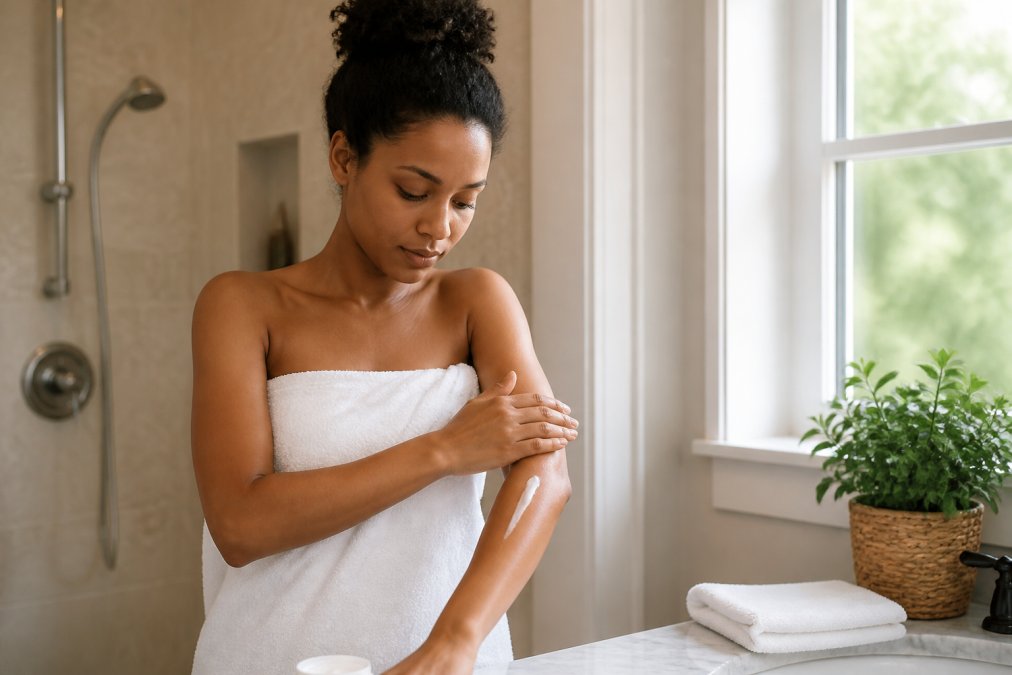
Here's the simple version:
- Pat skin partly dry with a soft towel.
- Leave it slightly damp.
- Smooth on a thick moisturizer or balm.
- Let it soak in before dressing.
How to Apply the Rule to Your Daily Bath or Shower
Keep water lukewarm, not hot. Hot water strips oils and speeds up transepidermal water loss, where moisture escapes through the skin.
Common Eczema Flare-Up Triggers to Track and Avoid
Eczema flare-up triggers are the everyday things that set off itching and redness. Tracking them turns guesswork into a pattern you can act on.
Watch for these common ones:
- Harsh soaps, detergents, and fragrances
- Wool, scratchy fabrics, and tight clothing
- Dry indoor air from heating or cooling
- Sweat, dust, and pet dander
- Stress and poor sleep
Environmental and Emotional Triggers That Catch People Off Guard
Some triggers hide in plain sight: a new laundry detergent, a scented candle, or a stressful work week can push sensitive skin over the edge.
Natural Oils for Eczema: Which Ones Support the Skin Barrier
Natural oils for eczema work best when they support lipid replenishment, refilling the fats your skin barrier needs. Some oils help; others just sit on top.
Two stand out:
- Virgin coconut oil: rich in fatty acids that support the barrier. Good for many people, but test it first.
- Sunflower seed oil: light, high in linoleic acid, and often well tolerated. A common pick for dry, sensitive skin.
How to Patch Test Any New Oil Safely
Patch testing is the only safe way to try a new oil, catching reactions before they spread.
Do this:
- Apply a small amount to your inner forearm.
- Wait 24 hours and check for redness or itching.
- If clear, test again on a small patch near the affected area.
- Wait another 24 hours before using it widely.
Bathing, Bleach Baths, and Cool Compresses: Calming the Itch
Calming the itch, or pruritus, comes down to three levers: cooling the skin, reducing surface bacteria, and sealing in moisture. Gentle bathing, bleach baths, and cool compresses each pull one lever, and used together in the right order they can cut a flare short before scratching does damage.
Gentle Bathing and Colloidal Oatmeal
A short, lukewarm bath hydrates the outer layer of skin and rinses away irritants like pollen, sweat, and detergent residue. Keep water between 90°F and 100°F, warm to the wrist, never hot, and cap it at about 10 minutes; longer or hotter soaks strip the lipids that hold your barrier together.
Bleach Baths: Dilution Is Everything
Bleach baths are not about bleaching the skin. At the right dilution they reduce Staphylococcus aureus, the bacteria that colonize eczema skin and drive infection-related flares, a concentration so low it feels like plain water.
Cool Compresses: The Fastest Itch Interrupt
When the itch spikes, a cool compress is the quickest way to break the scratch urge. Cold slows the nerve fibers that carry itch signals and temporarily numbs the skin.
Shop Pound Of Love Naturals now! →
How to do it:
- Soak a soft, clean cloth or cotton pad in cool, not ice-cold, water.
- Wring it out so it is damp, not dripping.
- Hold it on the itchy spot for 5 to 10 minutes.
- Re-wet as it warms. Never let it sit long enough to dry out the skin.
- Pat dry and moisturize immediately after.
Layer the tools: bathe or soak first, moisturize within three minutes, then use a cool compress only when the itch breaks through. Compresses treat the symptom; bathing and moisturizing treat the barrier.
What to Skip
- Hot water, long soaks, and steam rooms
- Scented bath products, essential oils added to bathwater, and Epsom salts with fragrance
- Loofahs, scrub brushes, and washcloths used aggressively
- Antibacterial soaps, they dry skin and can disrupt the microbiome further
If a bath or compress makes redness, oozing, or pain worse rather than better, stop and call your doctor. That pattern can signal a bacterial infection that needs treatment, not another home remedy.
The Psychological Toll of Chronic Itching (and How to Manage It)
Most eczema articles treat the mind as a side note. It is not. Chronic itch gets worse the more you pay attention to it, and its mental load is a clinical issue in its own right, not a soft add-on to the physical routine.
Why Itch and Stress Are Wired Together
Itch and stress share circuitry: the nerve fibers that carry itch signals also respond to emotional arousal, and the brain regions that process itch overlap heavily with those for anxiety and threat. That is why stress can trigger flares, and a flare can trigger stress in return. The loop is biological, not willpower.
Concrete Tools That Actually Help
Generic advice to "reduce stress" is useless. These tools have the clearest evidence and lowest barrier to entry:
- Diaphragmatic breathing: Four seconds in through the nose, six seconds out through the mouth, for five minutes. The long exhale is what activates the parasympathetic response. Do it when the itch starts, not just when you are calm.
- Guided meditation and body-scan apps: Ten minutes a day is enough to measurably lower perceived stress in most people. The point is not to empty your mind, it is to practice noticing the itch without scratching.
- Habit reversal: When you feel the scratch urge, substitute a competing behavior, press the spot with the flat of your hand, apply a cool compress, or rub moisturizer in circles. This is a standard behavioral technique for itch and it works better than trying to "just stop."
- Sleep hygiene: A cool, dark room (65°F to 68°F is a common target), a consistent bedtime, no screens for 30 minutes before bed, and moisturizing right before you get in. Cotton sheets, washed in fragrance-free detergent.
- Scheduled worry time: If nighttime is when the anxiety hits, set aside 15 minutes earlier in the evening to write down what is bothering you. The goal is to keep the bedroom from becoming the worry room.
When to Bring in a Professional
Natural remedies and self-care have limits. Talk to a doctor, dermatologist, or mental health provider if any of these apply:
- You are scratching in your sleep or waking up with new scratches
- The itch is interfering with work, school, or relationships
- You feel anxious or low most days, not just during flares
- You are avoiding social situations because of your skin
- Alcohol, cannabis, or other substances are becoming a way to cope with the itch
Building Your Daily Routine: A Step-by-Step Plan
A steady daily routine beats reacting to flares. Start this plan today and adjust as you learn your triggers.
Morning:
- Rinse with lukewarm water, no harsh soap.
- Apply moisturizer within three minutes.
- Dress in soft, loose cotton.
Evening:
- Take a short, lukewarm bath or shower.
- Follow the 3 minute rule right away.
- Add a natural oil on damp skin, then seal with a balm.
Weekly:
- Wash bedding in fragrance-free detergent.
- Check for new triggers in your notes.
- Patch test any new product before full use.
| Step | When | Why It Helps |
|---|---|---|
| Moisturize in 3 minutes | After every wash | Traps water, supports the barrier |
| Cool compress | When itch starts | Calms the urge to scratch |
| Patch test | Before new products | Catches reactions early |
| Track triggers | Daily | Reveals patterns to avoid |
Conclusion
Eczema rarely clears overnight, but a calm, steady routine can cut how often and how hard it flares. The 3 minute rule, trigger tracking, and barrier-supporting oils do the heavy lifting.
Frequently Asked Questions
How do you calm down eczema fast?
Apply a thick, fragrance-free moisturizer within three minutes of bathing to lock in water while skin is still damp. Use a cool compress on itchy areas for 10 to 15 minutes to numb the urge to scratch. Colloidal oatmeal baths and virgin coconut oil can also calm irritation. If redness or swelling worsens, contact a dermatologist.
What is the 3 minute rule for eczema?
The 3 minute rule for eczema means applying moisturizer within three minutes of getting out of the bath or shower. Skin is still damp during this window, so emollients trap that moisture before transepidermal water loss begins. This simple habit supports skin barrier function and reduces dryness that leads to itching. Keep your moisturizer within arm's reach of the tub so you can apply it immediately.
Can natural oils for eczema really restore the skin barrier?
Certain oils, including virgin coconut oil and sunflower seed oil, contain fatty acids that support lipid replenishment and moisture retention. They are not a cure for atopic dermatitis, but they can reduce dryness and improve skin hydration. Always patch test a small area first, since contact dermatitis reactions are possible even with natural ingredients.
What triggers eczema to flare up most often?
Common eczema flare-up triggers include harsh soaps, fragrance, wool clothing, sweat, dry indoor air, and stress. Environmental factors like pollen, dust mites, and pet dander also play a role. Many people find that keeping a symptom diary helps them spot patterns. Once you identify your triggers, trigger avoidance becomes far easier to build into daily life.