
Plant-Based Hair Care for Growth: 7 Natural Solutions
Table of Contents
- How Plant-Based Hair Care Supports Growth
- Key Ingredients for Hair Growth and Scalp Health
- Rosemary Oil for Hair Growth: Stimulating Follicles Naturally
- Castor Oil for Hair Growth: Conditioning and Strengthening
- Natural Hair Growth Tips for Building Your Routine
- Understanding Hair Porosity and Scalp Health
- Plant-Based Hair Care Products That Deliver Results
- Conclusion
- Frequently Asked Questions
Last Updated: September 23, 2026
How Plant-Based Hair Care Supports Growth
Plant based hair care for growth works by nourishing your scalp and hair follicles with botanical ingredients that strengthen strands, improve circulation, and reduce breakage. Unlike synthetic formulas that coat the hair shaft, plant-derived oils and herbs penetrate deeply to address root causes of thinning and slow growth.
Your scalp responds better to ingredients that mimic its natural biology than to silicones and sulfates that strip moisture and disrupt follicle function.
Specific plants work in different ways: rosemary stimulates follicle activity, castor oil conditions and strengthens, hibiscus prevents premature thinning, and saw palmetto blocks DHT. Combined in the right ratios, these ingredients create a synergistic effect stronger than any single plant alone.
Key Ingredients for Hair Growth and Scalp Health
Certain plant-derived compounds address specific problems: dormant follicles, poor scalp circulation, moisture loss, and breakage. Some combinations carry contraindication risks.
Rosemary oil improves blood flow to the scalp, delivering oxygen and nutrients to hair follicles. Peppermint oil amplifies this effect. Both are potent essential oils; undiluted application can cause irritation or contact dermatitis. Always use pre-formulated products or dilute essential oils at 2-3% essential oil to 97-98% carrier oil.
Saw palmetto helps block DHT, the hormone that miniaturizes hair follicles in people genetically predisposed to thinning. People taking hormone-sensitive medications should consult a healthcare provider before use.
Fenugreek strengthens the hair shaft and reduces breakage. Note: it can trigger allergic reactions in people with peanut or chickpea allergies. If you have legume sensitivities, patch-test first or avoid it.
Hibiscus conditions hair deeply and prevents premature shedding. It's rich in amino acids and vitamin C, both essential for collagen production in the hair shaft. Hibiscus is one of the gentler botanicals and rarely causes sensitivity reactions.
Amla (Indian gooseberry) is packed with vitamin C and antioxidants and supports the structural integrity of each strand. It can stain lighter hair temporarily if left on for extended periods.
Neem and tea tree oil fight bacterial overgrowth and reduce inflammation. Tea tree oil can cause contact dermatitis in sensitive individuals; never apply undiluted. Both should be used in pre-formulated products at safe concentrations.
Ingredient Interactions and Contraindications
Certain ingredient combinations require caution:
- Multiple essential oils (rosemary + peppermint + tea tree): When combined, essential oils can potentiate each other's irritant effects. If a product contains three or more essential oils, use it less frequently (once weekly rather than 2-3 times weekly) or dilute further before application.
- Fenugreek + legume allergies: Avoid entirely if you have peanut, chickpea, or other legume sensitivities.
- Saw palmetto + hormone-sensitive conditions: Consult a healthcare provider if you take birth control, hormone replacement therapy, or medications for prostate health.
- Neem or tea tree + sensitive scalp: Patch-test on a small area behind your ear or on your inner arm first. Wait 24 hours. If no redness, itching, or burning occurs, it's safe to use on your scalp.
- High concentrations of any oil + very fine or low-porosity hair: Heavy oils can cause buildup and weigh hair down. Use lighter carrier oils (jojoba, grapeseed) or reduce application frequency.
Patch Testing and Sensitivity Screening
Before using a new plant-based product, perform a patch test: apply a dime-sized amount to your inner arm or behind your ear and wait 24-48 hours. If you experience redness, itching, or burning, do not use on your scalp. Review the full ingredient list before purchase, and contact the manufacturer if terms like "botanical blend" are unclear.
Rosemary Oil for Hair Growth: Stimulating Follicles Naturally
Rosemary oil stimulates hair follicles by increasing blood circulation to the scalp. Better circulation means more active follicles and faster, thicker growth over time. Consistent application shows measurable improvement.
The 19 Herb Botanical Hair Growth Oil includes rosemary alongside 18 other botanicals and 7 carrier oils. Massage into your scalp using circular motions for 2-3 minutes, 2-3 times per week.

Castor Oil for Hair Growth: Conditioning and Strengthening
Castor oil conditions the hair shaft, seals in moisture, and prevents protein loss that leads to breakage. Black Jamaican castor oil is thicker and more conditioning, creating a protective barrier that reduces moisture loss. Its fatty acids reduce inflammation and support a healthier follicle environment.
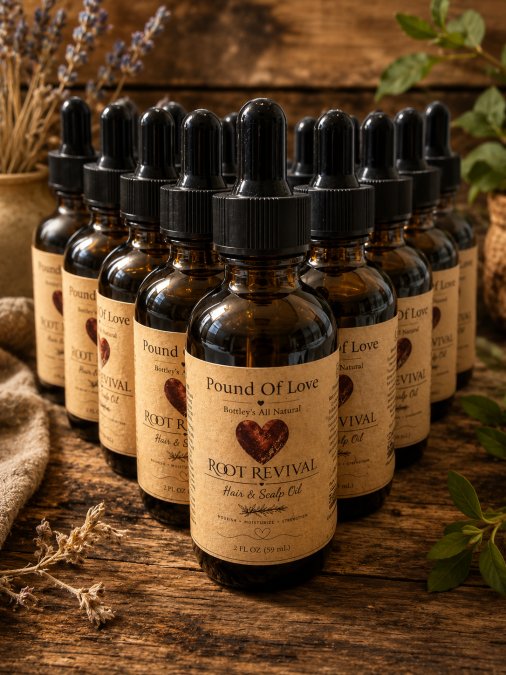
The Root Revival Hair & Scalp Oil combines Black Jamaican castor oil with rosemary, peppermint, saw palmetto, and pumpkin seed oil. This blend addresses both stimulation and conditioning in a concentrated 2-ounce format designed for targeted scalp application.

Use castor oil 2-3 times per week. Apply directly to the scalp and lengths, massage gently.
Natural Hair Growth Tips for Building Your Routine
Building an effective plant-based hair care routine requires consistency, the right products, and understanding the hair growth cycle.
Understanding the Hair Growth Cycle
Hair grows in three distinct phases, and only a portion of your scalp is in the growth phase at any given time.
Anagen (growth phase): This is when hair actively grows. It lasts 2-7 years depending on genetics. During anagen, the hair follicle is fed by blood vessels at the base, which is why scalp circulation matters so much. Plant-based oils that stimulate blood flow (rosemary, peppermint) work specifically during this phase.
Catagen (transition phase): The follicle shrinks and detaches from the blood supply. This lasts 2-3 weeks. Hair stops growing but hasn't shed yet.
Telogen (resting phase): The hair rests in the follicle for 2-4 months before shedding. A new anagen hair then begins growing beneath it. This is why you shed 50-100 hairs daily, they're completing their telogen phase (Integrative and Mechanistic Approach to the Hair Growth Cycle and Hair Loss).
At any moment, roughly 85-90% of your scalp hair is in anagen, 1% in catagen, and 10-15% in telogen (Integrative and Mechanistic Approach to the Hair Growth Cycle and Hair Loss).
Building Your Routine with Cycle Awareness
Tracking Progress Across Growth Cycles
Understanding Hair Porosity and Scalp Health
Hair porosity determines how well your hair absorbs and retains moisture. High porosity hair absorbs moisture quickly but can't hold it; use heavier oils like castor. Low porosity hair resists moisture absorption; use lighter oils like jojoba. Normal porosity hair responds well to most plant-based formulas. Test with a float test: drop a clean strand in water, sinking indicates high porosity, floating indicates low porosity.
Plant-Based Hair Care Products That Deliver Results
The most effective plant-based hair care products combine multiple ingredients in carefully balanced ratios. Single-ingredient oils have their place, but formulated blends address more problems simultaneously.
| Product | Best For | Key Strength | Application |
|---|---|---|---|
| 19 Herb Botanical Hair Growth Oil | Weekly deep treatment | 19 herbs + 7 carrier oils for comprehensive growth support | 2-3x weekly, massage into scalp |
| Root Revival Hair & Scalp Oil | Targeted thinning areas | Concentrated formula with saw palmetto and pumpkin seed oil | 2-3x weekly, apply directly to scalp |
| Microloc Clarifying Shampoo | Loc and textured hair | Removes buildup without stripping moisture | Weekly or as needed |
| Aloe Loc Hydration Mist | Daily hydration | Lightweight, non-greasy moisture between washes | Daily as needed |
Conclusion
Plant based hair care for growth works when you combine the right ingredients with consistency and an understanding of how your hair responds to botanicals. Rosemary stimulates. Castor oil conditions. Saw palmetto blocks DHT. Hibiscus prevents thinning. Together, these ingredients create an environment where hair grows stronger, longer, and healthier.
Frequently Asked Questions
What plant-based ingredients are best for supporting hair growth?
Rosemary, castor oil, saw palmetto, peppermint, and fenugreek are among the most effective plant-based ingredients for hair growth. Rosemary stimulates scalp circulation and follicle activity, while castor oil deeply conditions and strengthens strands. Saw palmetto blocks DHT, a hormone linked to hair thinning, and peppermint invigorates the scalp. These ingredients work best when combined in a balanced formula like the 19 Herb Botanical Hair Growth Oil, which layers multiple botanicals to address growth, scalp health, and moisture simultaneously.
How long does it take to see results from plant-based hair care for growth?
Improvements in scalp health and hair texture can be noticed with consistent use. Hair growth cycles are gradual. For best results, apply plant-based oils 2-3 times weekly and pair them with a clarifying shampoo to remove buildup. Consistency matters.
Can plant-based hair care help with thinning hair and hair breakage?
Yes. Plant-based oils can support both issues. Ingredients like fenugreek and hibiscus strengthen the hair shaft and reduce breakage, while saw palmetto and pumpkin seed oil support scalp health and hair density. Castor oil coats strands, and rosemary stimulates follicle activity. A comprehensive approach, using both growth-stimulating oils and a gentle clarifying shampoo, can support scalp health and protect existing strands.
What makes plant-based hair care different from sulfate-free or silicone-free products?
Plant-based hair care goes beyond avoiding harmful chemicals; it actively nourishes hair with botanical oils, herbs, and natural nutrients. Sulfate-free products simply skip stripping detergents, while silicone-free formulas avoid synthetic coatings. Plant-based solutions do both, they cleanse gently and deliver real nourishment through ingredients like rosemary, amla, and jojoba oil that work with your scalp's natural biology. This approach supports hair density, scalp circulation, and moisture retention rather than just preventing damage.
Ready to build your plant-based hair care routine? Shop Pound Of Love Naturals now and discover the difference that handcrafted botanical formulas make for hair growth and scalp health. Our 19-herb blend, Root Revival oil, and loc-specific products are formulated to work in harmony with your hair's natural biology, delivering real results from real ingredients.