
Why Synthetic Chemicals Irritate Your Skin Barrier
Table of Contents
- How the Skin Barrier Works and Why It Matters
- Why Synthetic Chemicals Irritate the Skin Barrier
- Signs of a Damaged Skin Barrier
- Common Synthetic Skincare Ingredients to Avoid
- Cumulative Exposure Thresholds and Ingredient Synergy
- Natural Ingredients for Skin Barrier Repair
- Conclusion
- Frequently Asked Questions
Last Updated: September 23, 2026
How the Skin Barrier Works and Why It Matters
Your skin barrier is the outermost layer of your skin, and it works like a brick wall that keeps water in and synthetic chemicals skin irritants out. At Pound Of Love Naturals, we explain it as a living shield: the "bricks" are skin cells, and the "mortar" is a mix of lipids, ceramides, and fatty acids that hold everything together.

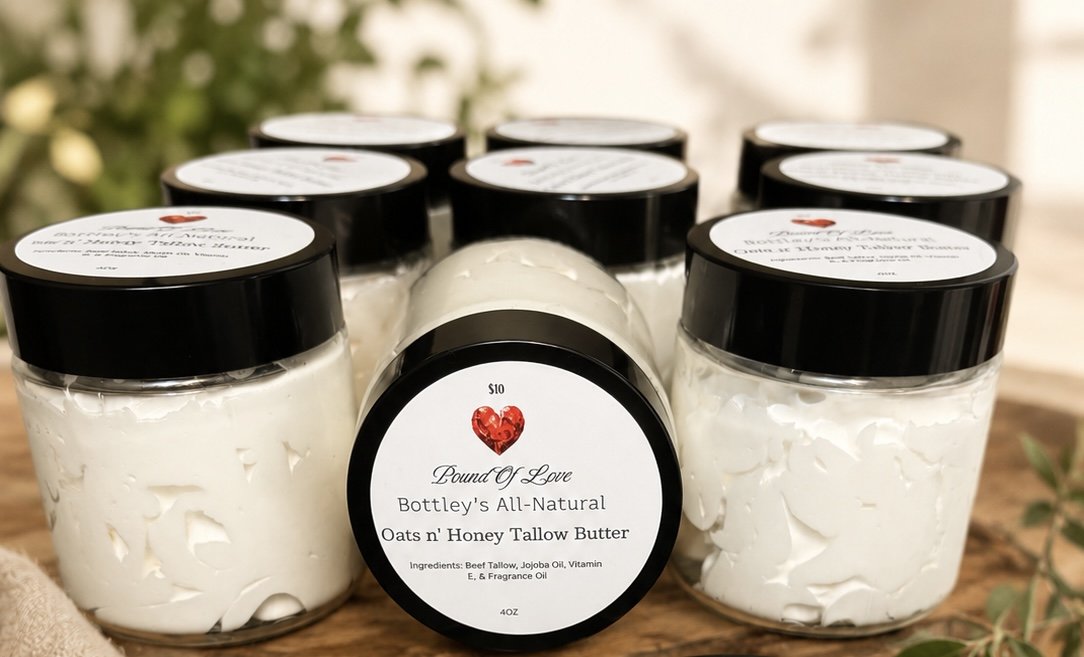
When that mortar breaks down, water escapes through a process called transepidermal water loss, and irritants slip past your defenses. That is why so many people ask why synthetic chemicals irritate the skin barrier: the answer starts with what those chemicals do to the mortar between your skin cells.
The stratum corneum is the top layer of dead skin cells that forms your first line of defense. It maintains skin homeostasis by balancing moisture, oils, and a slightly acidic pH. When that balance holds, your skin looks calm and feels soft. When it fails, redness, itching, and tightness follow.
Why Synthetic Chemicals Irritate the Skin Barrier
Synthetic chemicals irritate the skin barrier because many of them strip away the lipids and proteins that hold your skin's outer layer together. Once those structural pieces are gone, moisture leaks out and irritants get in.
This is not a small cosmetic problem. It is the mechanism behind most cases of contact dermatitis, and it explains why a product that felt fine for months can suddenly sting.
How Surfactants, Preservatives, and Fragrances Disrupt Lipids and Proteins
Surfactants are the cleansers that make soap foam. They are designed to grab oil and lift it away, but they cannot tell the difference between oil on your skin and the oils that make up your lipid barrier. Strong surfactants strip those natural oils, leaving skin tight and exposed.
Preservatives and synthetic fragrances cause a different kind of trouble. Some people develop sensitization, meaning the immune response builds over repeated contact until a reaction appears. The first exposure may cause nothing. The tenth may cause itching, erythema, and swelling.
Protein denaturation is the third piece.
The Microbiome-Chemical Interaction
Your skin hosts a community of bacteria that helps keep it healthy. Harsh cleansers and preservatives can disturb that community, creating a microbiome imbalance that leaves your skin more vulnerable to inflammation and infection.
Pound Of Love Bottley's All Natural →
Signs of a Damaged Skin Barrier
The most common signs of a damaged skin barrier are redness, dryness, itching, stinging, and a feeling of tightness after washing. If your usual moisturizer suddenly burns, that is a strong signal something has changed.
Diagnostic Self-Assessment: Is Your Barrier Compromised?
A simple self-check can help you decide whether your barrier needs attention. This is not a diagnosis, but it can guide your next steps.
- Does your skin sting or burn when you apply a product that used to feel fine?
- Does your skin feel tight within minutes of washing?
- Do you see persistent redness or flaking in the same areas?
- Does your skin react to fragranced products, even ones labeled natural?
- Has your skin become more sensitive over the past few months?
Common Synthetic Skincare Ingredients to Avoid
Several common synthetic skincare ingredients are worth avoiding if your barrier is already stressed. You do not need to fear every chemical, but knowing which ones cause the most trouble, and why, helps you read labels with confidence.
| Ingredient class | Common label names | How it stresses the barrier |
|---|---|---|
| Surfactants | Sodium lauryl sulfate, sodium laureth sulfate, ammonium lauryl sulfate | Lift oils indiscriminately, stripping the lipid mortar and raising transepidermal water loss |
| Preservatives | Parabens (methyl-, propyl-, butyl-), methylisothiazolinone, formaldehyde releasers (DMDM hydantoin, quaternium-15) | Can trigger sensitization over repeated contact; some are recognized contact allergens |
| Fragrances | "Parfum," "fragrance," phthalates | Fragrance mixes are among the most common causes of allergic contact dermatitis |
| Alcohols | Alcohol denat, SD alcohol, isopropyl alcohol | Defat and sting already-compromised skin; can disrupt the lipid bilayer |
| Dyes and colors | FD&C and D&C colorants, "CI" numbers | Offer no skin benefit and add another sensitization opportunity |
A few specifics worth knowing:
- Sodium lauryl sulfate is a benchmark irritant in dermatology patch testing precisely because it reliably disrupts the stratum corneum. If your skin stings after cleansing, this is often why.
- Fragrance is not one chemical but a blend that can contain dozens of compounds. "Unscented" and "fragrance-free" are not the same label, unscented products may still contain masking fragrance.
- Parabens are among the most-studied preservatives, and reactions are relatively uncommon in the general population but more likely on already-compromised skin.
- Formaldehyde releasers work by slowly releasing small amounts of formaldehyde to keep water-based products stable. They are recognized sensitizers and a frequent patch-test positive.
- Phthalates rarely appear on labels by name because they can hide inside a fragrance blend.
- Alcohol denat is not inherently harmful, but on a barrier that is already leaking water, it adds insult.
How to Read a Label Without Fear
You do not need to memorize every chemical. A practical approach:
- Scan the first five ingredients. In most formulas, these make up the bulk of the product.
- Treat "fragrance" and "parfum" as a single unknown variable if your skin is reactive.
- Prefer short ingredient lists when your barrier is stressed. Fewer ingredients means fewer chances for a reaction.
- Patch test new products on your inner forearm for three to five days before using them on your face.
Cumulative Exposure Thresholds and Ingredient Synergy
Two ideas explain why a product that worked last year can suddenly cause a problem: cumulative exposure thresholds and ingredient synergy. Most guides skip both, but they are often the real answer to why synthetic chemicals irritate the skin barrier over time.
The Bucket Theory of Sensitization
Think of your skin's tolerance as a bucket. Every exposure to an irritant or allergen adds a little water. A single splash does nothing. But day after day, product after product, the bucket fills. Eventually it overflows, and that overflow is the reaction.
This is why:
- A product you used for years can suddenly sting.
- A patch test can come back clear while real-life use causes a rash.
- Two people using the same product get different results.
Ingredient Synergy: When Mild Becomes Harsh
Ingredient synergy means two ingredients that are gentle alone can become irritating when combined. This is not about one bad actor, it is about the interaction.
Pound Of Love Bottley's All Natural →
Examples of combinations that can overwhelm a stressed barrier:
- Exfoliating acids plus retinoids. Both accelerate cell turnover. Layered together, they can strip the barrier faster than it can rebuild.
- Cleansing brushes or scrubs plus active serums. Physical exfoliation opens the door; actives then penetrate deeper than intended.
- Multiple fragrance-containing products. Each one may be below the irritation threshold alone, but the combined load can cross it.
- Alcohol-based toners plus drying acne treatments. Both defat the skin, and together they can leave the barrier raw.
How to Lower Your Cumulative Load
- Keep a simple log of what you apply and when symptoms flare. Patterns emerge within a few weeks.
- Introduce one new product at a time, with at least a week between additions.
- When your skin is reactive, cut back to a gentle cleanser, a basic moisturizer, and sunscreen. Nothing else.
- Give your barrier four to six weeks of low-load living before reintroducing actives.
Natural Ingredients for Skin Barrier Repair
Natural ingredients for skin barrier repair work by replacing what your skin has lost: lipids, moisture, and soothing compounds. The goal is not to "fix" your skin, but to give it the raw materials it needs to rebuild.
Look for these in your routine:
- Ceramides and fatty acids, help rebuild the lipid mortar between skin cells.
- Emollients such as shea butter and jojoba oil, soften and smooth rough, flaky skin.
- Occlusives such as tallow, form a protective layer that slows water loss.
- Colloidal oats, calm itching and redness on sensitive skin.
- Tamanu and sea buckthorn oils, support skin healing and add antioxidant protection.
- Calendula and turmeric, soothe inflammation and improve skin tone over time.
Conclusion
Repairing a stressed skin barrier takes patience, and the hardest part is resisting the urge to try every new product that promises a fix. Simplify, choose gentle botanical ingredients, and give your skin time to rebuild.
Frequently Asked Questions
What can destroy your skin barrier?
Harsh surfactants like sulfates strip away the lipid barrier, while synthetic preservatives and fragrances trigger inflammation and immune response. Over-washing, hot water, and cumulative chemical exposure also break down the stratum corneum. When the barrier weakens, transepidermal water loss increases and irritants penetrate more easily, leading to contact dermatitis and sensitization over time. Switching to gentle, fragrance-free formulas helps restore skin homeostasis.
How do synthetic preservatives affect the skin microbiome?
Synthetic preservatives like parabens and formaldehyde-releasers can disrupt the skin microbiome by killing beneficial bacteria along with harmful ones. This microbiome imbalance weakens the skin's natural defense system, making it easier for irritants and allergens to trigger an immune response. Over time, repeated exposure may lead to chronic skin inflammation and a compromised barrier that struggles to retain moisture and repair itself.
How long does a chemical reaction last on skin?
Irritation from synthetic chemicals typically resolves in one to two weeks once the trigger is removed. Gentle cleansing and barrier support with emollients and occlusives can aid recovery.
What natural ingredients support skin barrier repair?
Ceramides, fatty acids, and botanical oils like tamanu, jojoba, and evening primrose help rebuild the lipid barrier. Colloidal oats and calendula calm skin inflammation, while tallow provides fat-soluble vitamins A, D, E, and K that support skin repair. Shea butter and sea buckthorn oil deliver deep moisture. Look for products free from synthetic fragrances and harsh preservatives to avoid re-triggering irritation while your barrier heals.