
Tallow vs. Retinol: Which Works Better for Skin?
Table of Contents
- What Beef Tallow Is and How It's Made
- What Retinol Is and How It Works
- Beef Tallow for Skin: Composition and Fatty Acids
- Tallow vs. Retinol: Direct Comparison
- Is Beef Tallow a Retinol Alternative?
- Can You Use Tallow and Retinol Together?
- Natural Alternatives to Retinol
- Choosing by Skin Type and Concerns
- Frequently Asked Questions
Last Updated: October 17, 2026
What Beef Tallow Is and How It's Made
Beef tallow is rendered fat from grass-fed cattle, processed into a smooth, shelf-stable butter, and when comparing tallow vs retinol, each serves a distinct purpose in skincare. At Pound Of Love Naturals, we slowly melt high-quality fat, filter out impurities, and whip it with botanical oils for a luxurious texture that absorbs quickly.

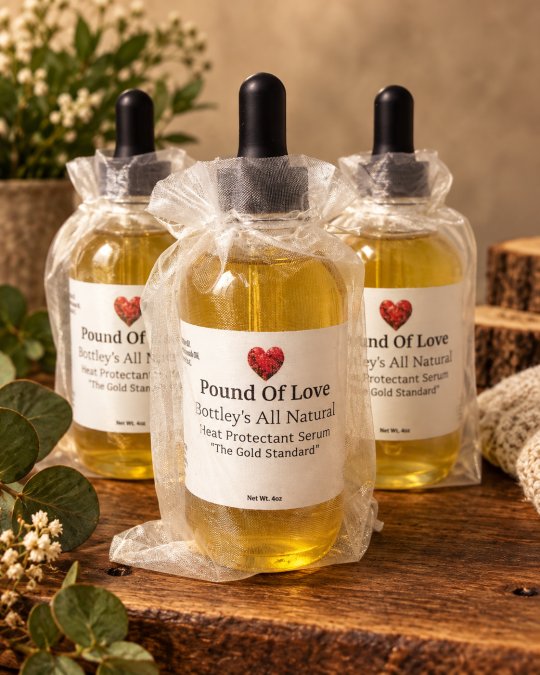
Tallow has been used in skincare for centuries because its fatty acid profile closely mirrors the skin's natural sebum, so it works with your skin's biology rather than against it. Rendering removes water and solids, leaving a concentrated source of fat-soluble vitamins A, D, E, and K.
What makes tallow different from modern moisturizers is its simplicity: no emulsification, no synthetic stabilizers. The fat itself is naturally stable and deeply nourishing, which appeals to people seeking fewer ingredients and more transparency about what touches their face.
What Retinol Is and How It Works
Retinol is a form of vitamin A, a fat-soluble compound extensively studied for its effects on skin cell turnover. Unlike tallow, which primarily moisturizes and supports the barrier, retinol actively influences how skin cells behave at a biochemical level.
Retinol binds to specific receptors in skin cells, signaling them to turn over faster and produce more collagen. Results take weeks, and it often comes with an adjustment period where skin may peel, redden, or feel irritated as cells shed more rapidly.
Potency varies widely by concentration and formulation. Over-the-counter retinol is less potent than prescription retinoids like tretinoin; stronger forms work faster but carry higher irritation risk, especially for first-time users or sensitive skin.
Beef Tallow for Skin: Composition and Fatty Acids
Beef tallow's strength lies in its fatty acid composition: oleic, stearic, and palmitic acid, the same fats your skin naturally produces. That similarity is why tallow feels compatible with all skin types, from oily to dry.
The fat-soluble vitamins in tallow (A, D, E, K) support skin barrier function. Vitamin A in tallow exists as retinyl palmitate, a less potent form than pure retinol, so it won't trigger the same cellular changes. Instead, it nourishes and protects without forcing rapid cell turnover.
Tallow also contains conjugated linoleic acid (CLA), which some research suggests supports skin health, though the evidence is weaker than for retinol's effects on wrinkles. Tallow's real value is barrier repair and moisture retention: it seals hydration in and reduces water loss throughout the day.
For people with eczema, rosacea, or reactive skin, tallow's gentle profile makes it a safer starting point than retinol. Products like [Pound Of Love Naturals' Bottley's All Natural Essentially Tallow Butter](https://poundoflovenaturals.com/products/pound-of-love-bottleys-all-natural-essentially-tallow-butter-8oz) combine tallow with jojoba oil and vitamin E to amplify hydration without actives that demand adjustment periods.

Tallow vs. Retinol: Direct Comparison
Moisturizing and Barrier Support
Tallow wins decisively on immediate hydration: it absorbs within minutes and creates a protective layer that locks moisture in for hours. Retinol offers no moisturizing benefit on its own and often dries skin during the adjustment phase.
If barrier repair is your goal, tallow is the faster, gentler choice, working with your skin's natural oils rather than forcing biochemical changes. Retinol requires patience; most people don't see smoother, more hydrated skin until weeks of consistent use.
Anti-Aging and Cell Turnover
Retinol has decades of clinical evidence showing it reduces fine lines and improves texture through accelerated cell turnover. Tallow has no comparable research at a cellular level; its retinyl palmitate is too weak to trigger the same changes.
The comparison is clear: retinol is the active ingredient for aging skin. Tallow is the supporting player, keeping skin healthy and hydrated but not actively fighting photoaging or collagen loss the way retinol does.
Irritation and Skin Tolerance
Tallow rarely causes irritation. Sensitive, eczema-prone, and reactive skin types tolerate it well because it's a food-grade fat your skin recognizes, with no adjustment period, peeling, or redness.
Pound Of Love Bottley's All Natural Essentially Tallow Butter 8oz →
Retinol causes irritation in most people during the first 4-8 weeks: redness, peeling, dryness, and sun sensitivity are common. Some never adapt; others find it manageable once skin acclimates. Starting low and building tolerance is the standard protocol.
| Factor | Tallow | Retinol |
|---|---|---|
| Hydration | Immediate, deep | Delayed; drying initially |
| Cell turnover | Minimal | Significant |
| Irritation risk | Very low | Moderate to high |
| Adjustment period | None | 4-8 weeks typical |
| Evidence for wrinkles | Limited | Extensive |
| Best for sensitive skin | Yes | No (unless prescribed) |
Is Beef Tallow a Retinol Alternative?
Short answer: not in the way most people mean it. Tallow and retinol are not interchangeable, and the confusion comes from two claims that sound similar but aren't: that tallow contains vitamin A, and that vitamin A in tallow does what retinol does.
The vitamin A claim, examined. Tallow does contain small amounts of naturally occurring vitamin A, largely as retinyl esters such as retinyl palmitate. But three things matter more than its presence:
- Dose is not standardized. The vitamin A content of rendered fat varies with the animal's diet, the fat source, and the rendering method. There is no standardized, labeled retinoid dose in a jar of tallow the way there is in a formulated retinol product.
- Form is weak. Retinyl palmitate is a storage ester. It must be converted in skin to retinal, then to retinoic acid, before it can bind retinoid receptors. That multi-step conversion is inefficient, and the amount delivered by a tallow balm is far below what over-the-counter retinol products are formulated to deliver.
- Delivery matters. Retinol products are formulated with penetration enhancers, stabilizers, and pH considerations so an active dose reaches the epidermis. A fat-based balm mostly sits on the surface, which is exactly what you want for barrier support but not for cell-turnover signaling.
So the honest framing is this: tallow is a moisturizer with trace vitamin A, not a retinoid. It does not replace retinol for photoaging, and it should not be marketed as a natural retinol alternative.
What tallow can substitute for. Tallow is a credible stand-in for a rich occlusive moisturizer, a barrier cream, or a cleansing balm. If your current routine uses a heavy cream to seal in hydration, tallow can fill that role. If your routine depends on an active for fine lines, tallow cannot fill that role.
Evidence quality, side by side. Retinoids have decades of controlled research for photoaging, including improvements in fine lines, texture, and mottled pigmentation. Topical tallow has very little peer-reviewed clinical research and no head-to-head trials against retinol for wrinkles. That absence isn't proof tallow fails, but any anti-aging claim for tallow is extrapolation, not evidence.
The practical decision rule. When deciding between tallow vs retinol, ask what job the product does in your routine. For hydration, barrier support, or soothing, tallow is reasonable. For changing how skin cells turn over, retinol is the evidence-backed tool. Many people use both, with tallow as the moisturizing layer and retinol as the active, and that's where the two stop competing and start complementing.
Can You Use Tallow and Retinol Together?
Yes, and many dermatologists recommend it. The combination is strategic: retinol handles cell turnover and collagen support, while tallow manages the irritation and dryness retinol causes.
The typical approach: use retinol 2-3 times per week (starting low) and follow with a tallow-based moisturizer those nights; on non-retinol nights, use tallow alone. This reduces irritation and helps skin adapt faster.
One caution: some retinol formulations already contain moisturizers. Check ingredients before layering. If retinol is paired with heavy oils, adding tallow may feel greasy; with a lightweight formulation, tallow layering is ideal.
For facial care, Pound Of Love Naturals' Bottley's All Natural Facial Moisturizer with sea buckthorn oil, turmeric, and calendula pairs well with retinol routines. The botanical ingredients soothe irritation while tallow locks in hydration, creating a buffer against retinol's drying effects.
Natural Alternatives to Retinol
If retinol's irritation concerns you, several plant-based compounds offer gentler anti-aging support, though none match retinol's clinical evidence.
Bakuchiol is a plant-derived retinol alternative that mimics some of retinol's effects without irritation, supporting cell turnover and collagen production, though research is newer and less extensive.
Vitamin C brightens skin and supports collagen synthesis. It's gentler than retinol and pairs well with tallow-based moisturizers, but it's unstable and degrades quickly once opened.
Peptides signal skin cells to produce more collagen and elastin. They're gentle and non-irritating, but effects are subtle and slow to appear.
Pound Of Love Bottley's All Natural Essentially Tallow Butter 8oz →
Plant-based retinol alternatives like rosehip seed oil contain retinol precursors in amounts too low to trigger significant cell turnover. They're moisturizing and antioxidant-rich, but not active anti-aging ingredients.
The honest truth: none of these alternatives deliver retinol's clinical results. They're better for sensitive skin, but for reducing fine lines and photoaging, retinol remains the gold standard. Tallow complements them by providing the hydration and barrier support they lack.
Choosing by Skin Type and Concerns
There's no universal recommendation. The right choice depends on your skin type, goal, and tolerance for an adjustment period.
Sensitive or reactive skin. Start with a fragrance-free tallow balm and patch test: apply a small amount to the inner forearm or jawline for 3 to 5 nights before full-face use. If there's no stinging, redness, or breakout, build to daily use.
Dry or eczema-prone skin. Tallow is a strong fit for the moisturizing step because its oleic, stearic, and palmitic acid content is occlusive and emollient. Apply to slightly damp skin after cleansing to trap water, and layer a second thin coat on rough patches.
Oily or acne-prone skin. The concern with tallow is comedogenicity, which varies by person and formulation. A heavy, unrefined balm can feel occlusive; a whipped, lighter formulation is easier to tolerate.
Mature or photoaged skin. This is retinol's strongest use case. A common pattern: 2 to 3 nights per week to start, applied to dry skin, followed by a tallow-based moisturizer to reduce dryness; tallow alone on off nights.
Rosacea-prone skin. Barrier-friendly, fragrance-free moisturizers are usually better tolerated than actives during flares. Tallow can serve as the moisturizing step if it doesn't sting. Retinol is often irritating for this skin type; if a clinician recommends it, a low concentration and slow ramp are typical.
Pregnancy, breastfeeding, and medications. Over-the-counter retinol and prescription retinoids are generally approached with caution during pregnancy, and many clinicians advise avoiding them. This is a conversation to have with a clinician, not a decision from an article.
A simple protocol that works across skin types. Patch test any new product for 3 to 5 nights. Introduce one new product at a time. With retinol, start at 1 to 2 nights per week and increase only when irritation settles.
Frequently Asked Questions
Does beef tallow contain retinol or vitamin A?
Beef tallow from grass-fed cattle contains fat-soluble vitamins A, D, E, and K, but not retinol itself. The vitamin A in tallow is in retinyl palmitate form, which differs from the active retinol used in skincare products. Retinol is a concentrated, isolated active ingredient designed to trigger specific cell-turnover responses, whereas tallow's vitamin A works primarily as a nourishing component supporting skin barrier function and overall hydration.
Can you use tallow and retinol together?
Yes, you can use tallow and retinol together, but timing matters. Apply retinol first to clean, dry skin, wait 15-20 minutes for it to absorb, then layer a tallow-based moisturizer on top. This approach lets retinol penetrate while the tallow seals in hydration and reduces irritation. For sensitive skin, start with retinol 2-3 times per week, then increase frequency as tolerance builds. Always use sunscreen during the day when using retinol.
Is beef tallow a retinol alternative for reducing wrinkles?
Beef tallow is not a direct retinol replacement for active anti-aging. Retinol works by accelerating cell turnover and collagen production through specific molecular pathways. Tallow excels at supporting skin barrier integrity, reducing dryness, and maintaining hydration, which can improve skin texture and reduce the appearance of fine lines caused by dehydration. For photoaging and deeper wrinkles, retinol or prescription retinoids remain the evidence-backed choice; tallow works best as a complementary moisturizer.
Who should choose tallow over retinol?
Tallow is ideal for people with sensitive, reactive, or eczema-prone skin who need deep hydration without active ingredients. It suits those new to skincare, anyone experiencing retinol irritation, and people seeking natural, plant-based products. Those with compromised skin barriers, inflammatory conditions, or who prefer avoiding synthetic actives benefit from tallow's gentle, nourishing profile. If your goal is active cell turnover and clinical anti-aging results, retinol remains the stronger choice.