
Botanical Hair Care Alternatives to Allpa
Table of Contents
- Why Choose Botanical Hair Care Alternatives
- Rosemary Scalp Oil Benefits and Carrier Oil Profiles
- Handcrafted Botanical Hair Care vs. Mass-Produced Options
- How to Choose Botanical Hair Products for Your Needs
- Pound Of Love Naturals: A Focused Alternative
- What to Avoid in Botanical Hair Products
- Frequently Asked Questions
Last Updated: September 30, 2026
Why Choose Botanical Hair Care Alternatives
When you're searching for botanical hair care alternatives, you're likely frustrated with conventional products that promise results but deliver harsh chemicals instead. The reality is simple: not every hair care solution needs to come from a laboratory. Many people find that natural, plant-based formulations deliver real scalp health improvements without the side effects of synthetic ingredients.

The shift toward botanical alternatives reflects a broader understanding of how hair actually grows. Your scalp thrives when it's nourished with the right fatty acids, antioxidants, and botanical compounds, not stripped by sulfates and silicones. This guide explores what makes botanical hair care work, how to evaluate options beyond the mainstream brands, and which products genuinely deliver on their promises.
At Pound Of Love Naturals, we've spent years formulating handcrafted botanical hair care designed to work with your body's natural biology rather than against it. Below, we'll show you exactly how to choose the right botanical alternative for your specific hair needs.
Rosemary Scalp Oil Benefits and Carrier Oil Profiles
Rosemary oil stands out as one of the most researched botanical ingredients for scalp health and follicle stimulation. The herb contains compounds that encourage scalp circulation.
But rosemary oil alone isn't enough. How it's delivered matters enormously. The carrier oil you pair it with determines bioavailability, how well your scalp actually absorbs the beneficial compounds. This is where most mass-produced options fall short.
A quality carrier oil profile includes multiple fatty acids that mirror your scalp's natural sebum. Here's what to look for:
- Jojoba oil, matches your scalp's natural sebum composition, preventing both dryness and excess oil buildup
- Coconut oil, penetrates the hair shaft to reduce protein loss, though some scalps find it comedogenic
- Black seed oil, powerful growth stimulant with antifungal properties that address scalp inflammation
- Avocado oil, deeply penetrating, rich in vitamins and fatty acids for nourishment
- Grapeseed oil, lightweight option that strengthens hair and seals in moisture without heaviness
The best botanical hair care formulations combine 3-5 carrier oils rather than relying on a single base. This creates a balanced fatty acid profile that works across different hair types and scalp conditions.
Handcrafted Botanical Hair Care vs. Mass-Produced Options
The difference between handcrafted and mass-produced botanical hair care comes down to ingredient integrity and formulation philosophy. Mass-produced options prioritize shelf stability and cost efficiency, which means shorter ingredient lists, synthetic preservatives, and standardized formulas that don't account for individual scalp needs.
Handcrafted botanical hair care takes the opposite approach. Small-batch production allows for higher botanical concentrations, fresh ingredient infusions, and the flexibility to adjust formulations based on seasonal herb availability.
The ingredient transparency matters too. With mass-produced options, you're often seeing fragmented supply chains where oils are pre-blended by distributors. Handcrafted brands source directly and control every step, from herb selection through final bottling.
Consider the practical difference: a mass-produced scalp oil might contain 3-4 carrier oils and a handful of herbs. A handcrafted alternative like Pound Of Love Naturals' 19 Herb Botanical Hair Growth Oil combines 19 carefully selected herbs with 7 nourishing carrier oils, each chosen for specific benefits to follicle stimulation and scalp health. That complexity simply doesn't exist in factory formulations designed for rapid production.
19 Herb Botanical Hair Growth Oil 8oz →

How to Choose Botanical Hair Products for Your Needs
Selecting the right botanical hair care alternative requires understanding your specific scalp condition and hair goals. Generic recommendations don't work because scalp health varies dramatically based on climate, water quality, styling practices, and individual biology.
Start by identifying your primary concern. Are you dealing with hair thinning, slow growth, scalp irritation, dryness, or excess sebum regulation? Each issue requires different botanical compounds. A formula designed for thinning hair emphasizes ingredients like saw palmetto and pumpkin seed oil. A product targeting scalp inflammation focuses on neem, cloves, and lavender for their soothing properties.
Your hair type also determines which carrier oils work best for you. Fine, straight hair benefits from lightweight carriers like grapeseed oil that won't weigh strands down. Coarse, textured hair needs heavier penetrating oils like avocado and coconut to provide adequate moisture and nourishment.
Ingredient Transparency and Sourcing
Non-negotiable: every botanical hair product should list its ingredients in descending order by weight. If a brand won't specify which herbs are included or where they're sourced, move on. Transparency isn't optional, it's how you verify you're getting what you're paying for.
Quality sourcing directly impacts efficacy. Brands that share sourcing information, whether herbs are organic, where they're grown, and when they're harvested, are demonstrating genuine commitment to product quality.
Look for cold-pressed or macerated extraction methods rather than heat extraction. Cold processes preserve the delicate antioxidant properties. Heat extraction is cheaper but sacrifices potency.
Hair Type-Specific Formulations
The most effective botanical hair care products are formulated with specific hair types in mind. Locs require different support than loose natural hair. Microlocs need gentle clarifying without disrupting the pattern. Transitioning hair benefits from moisture-rich formulations that support both natural and relaxed sections.
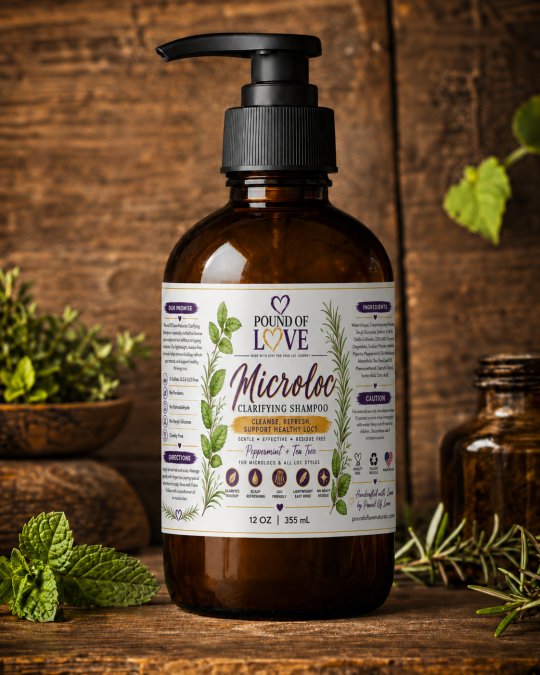
Pound Of Love Naturals addresses this directly. Their Microloc Clarifying Shampoo is specifically formulated to remove buildup and excess oil without disturbing loc patterns, something generic clarifying shampoos simply can't do. Their Aloe Loc Hydration Mist targets the between-wash hydration needs that loc wearers face, reducing frizz while maintaining lightweight moisture.

For those focused on hair growth and scalp stimulation, the 19 Herb Botanical Hair Growth Oil works across all hair types because its balanced carrier oil profile and diverse herb selection adapt to different scalp conditions. The Root Revival Hair & Scalp Oil with Pumpkin Seed and Saw Palmetto offers a more concentrated approach for those specifically addressing thinning hair and DHT sensitivity.
Pound Of Love Naturals: A Focused Alternative
Pound Of Love Naturals represents what happens when a brand commits to handcrafted botanical formulations without compromise. Every product is small-batch, ingredient-transparent, and formulated to work with your body's natural biology rather than against it.
The brand's philosophy centers on replacing synthetic chemicals with high-quality botanical oils, butters, and herbs. This isn't marketing language, it's reflected in every product they create. When you look at their ingredient lists, you see recognizable botanicals, not lab-created compounds.
19 Herb Botanical Hair Growth Oil 8oz →
19 Herb Botanical Hair Growth Oil
This is the foundational product for anyone serious about botanical hair care alternatives. The 19 Herb Botanical Hair Growth Oil combines rosemary, fenugreek, peppermint, cloves, hibiscus, and 14 additional herbs specifically selected for follicle stimulation and scalp health. The seven carrier oils, olive, coconut, sweet almond, grapeseed, black seed, jojoba, and avocado, create a balanced fatty acid profile that addresses multiple scalp conditions simultaneously.
What makes this formula work is the botanical infusion approach. Rather than simply mixing essential oils into a carrier base, Pound Of Love Naturals infuses whole herbs into the oils, extracting their full spectrum of beneficial compounds. This method preserves antioxidant properties.
The formula addresses common hair concerns: thinning edges, dry scalp, slow growth, and lack of moisture. Whether you're wearing locs, natural hair, braids, or transitioning hair, this oil works because it supports healthy scalp circulation, proper sebum balance, and follicle nourishment.
Root Revival Hair & Scalp Oil with Pumpkin Seed and Saw Palmetto
For those specifically targeting hair thinning and scalp density, the Root Revival formula offers a more concentrated approach. Pumpkin seed oil brings zinc, antioxidants, and fatty acids that support scalp health. Saw palmetto works through a different mechanism, traditionally used to support hair density and scalp balance.
This combination is paired with rosemary leaf oil (clinically studied for scalp circulation stimulation), jojoba oil (for sebum balance), peppermint oil (for invigorating scalp stimulation), and black Jamaican castor oil (for deep conditioning and strand coating).
Microloc Clarifying Shampoo and Aloe Hydration Mist
Loc wearers face unique hair care challenges that generic products simply don't address. The Microloc Clarifying Shampoo removes buildup, excess oil, and residue without disturbing your loc pattern, something conventional clarifying shampoos struggle with. The gentle formula cleans thoroughly while maintaining moisture, leaving locs feeling refreshed and lightweight.
What to Avoid in Botanical Hair Products
Not all products labeled "botanical" deliver genuine botanical benefits. Many brands use the term loosely, adding small amounts of plant extracts to synthetic-heavy formulations and calling it natural. Here's what actually indicates a product isn't worth your time.
Frequently Asked Questions
What makes botanical hair care alternatives better than synthetic options?
Botanical hair care alternatives work with your scalp's natural biology rather than against it. They deliver fatty acids, antioxidants, and plant-derived compounds that support scalp health and follicle stimulation without synthetic fillers or harsh surfactants. Natural ingredients like rosemary, saw palmetto, and pumpkin seed oil have been studied for their ability to improve hair density and reduce breakage, offering real results without the side effects common to synthetic alternatives.
What are the rosemary scalp oil benefits for hair growth?
Rosemary oil stimulates scalp circulation. It also possesses antioxidant properties. When combined with carrier oils that support sebum regulation, rosemary oil helps maintain a balanced scalp environment.
How do I know if a handcrafted botanical hair product is high-quality?
Look for brands that disclose their full ingredient list with botanical names, specify extraction methods, and explain sourcing practices. High-quality handcrafted products avoid synthetic fragrances, parabens, and sulfates. Check whether the brand provides information about carrier oil profiles and their fatty acid content. Transparency about small-batch production and ingredient sourcing signals a brand that prioritizes clean beauty standards.
Can I use botanical hair oils if I have sensitive scalp or eczema-prone skin?
Botanical oils can be beneficial for sensitive scalps when formulated correctly. Look for non-comedogenic carrier oils like jojoba that mimic natural sebum without clogging follicles, and avoid oils known to trigger irritation. Ingredients like neem, lavender, and peppermint have calming properties. Start with a patch test on a small area, use diluted oils rather than concentrated formulas, and introduce one new product at a time to identify any sensitivities.